
St. Lucia
Who Knew?

The island of St. Lucia in the Caribbean is the only country in the world named after a woman—in this case Saint Lucia, or Saint Lucy. Discovered by the Europeans in about 1500, ownership of the island passed back and forth between the French and the British, but which country gave the island its name is unknown.
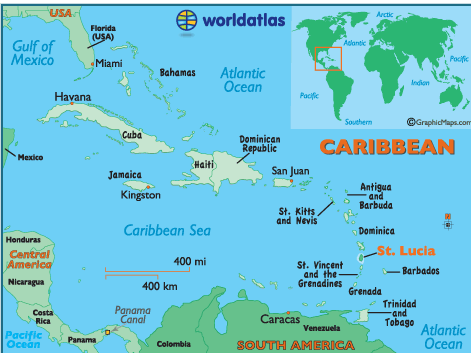
That unknown factor is fitting, since facts about the original St. Lucia are also sparse and conflicting. Just as two European countries owned the island, there are two legends associated with the Saint.
According to some sources, Saint Lucia lived in Syracuse, a city in Sicily in the early fourth century. After her mother was healed by prayer, Lucia converted to Christianity and took vows of poverty and celibacy. A rich pagan wanted to marry her, and when she refused, reported her to the Roman authorities. At that time, Christianity was still illegal in the Roman Empire.
Authorities sentenced her to a life as a prostitute but when they came to take her to the brothel, she became immoveable. Even a team of oxen could not carry her away. The authorities then sentenced her to death by fire, but the fire didn’t burn her. So, she was stabbed in the neck, and she died.
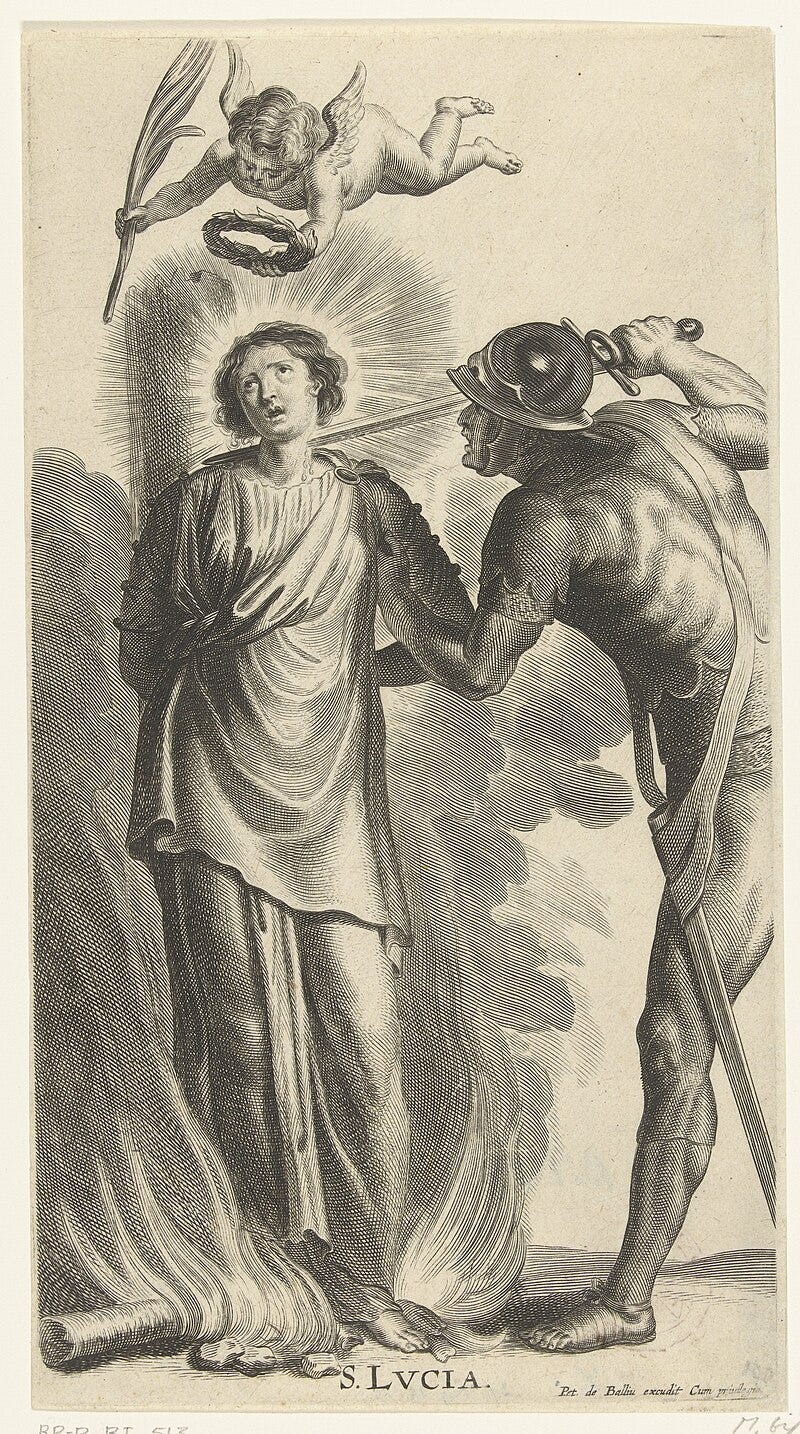
Later, versions claim that before her death, she made a prophesy which angered the Governor of Syracuse. He ordered her eyes to be gouged out. Another version claimed that she, herself, gouged out her eyes before her death as a response to someone praising them as beautiful.
Both variants claim that when her body was prepared for burial, her eyes had been restored.
A less grizzly story of St. Lucia claims that she would go down into the catacombs where Christians hid from Roman persecution bringing them food, drink, and other supplies. She would wear candles in a wreath on her head so that her hands could carry more.
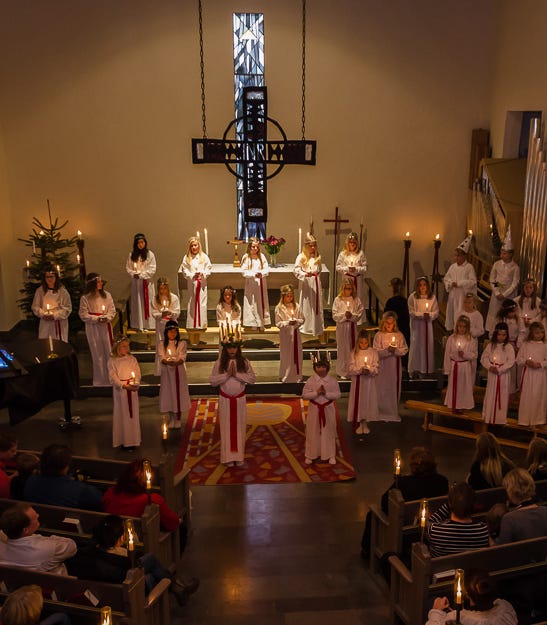
Lucia’s name has as its root word LUX, the Latin word for light. The saint is often seen as the bearer of light in the darkness. Her Saint’s Day is December 13th, not far from the shortest day and longest night of the year. Many Scandinavian countries with their long winter season and short winter’s day, adopted St. Lucia as a patron saint. In Sweden, there a traditional celebration for St. Lucia Day. Early on December 13th, the eldest daughter in the family would be dressed in white with a crown of candles. She would then bring traditional breakfast rolls to the family. There are larger and more elaborate celebrations in churches.
Just as we might never know the truth about the person who has been revered as St. Lucia or St. Lucy, we might also never know how one of the smallest islands in the Caribbean (238 square miles in area—smaller than any US state) got its name.
I so enjoy your posts. Interesting and informative!